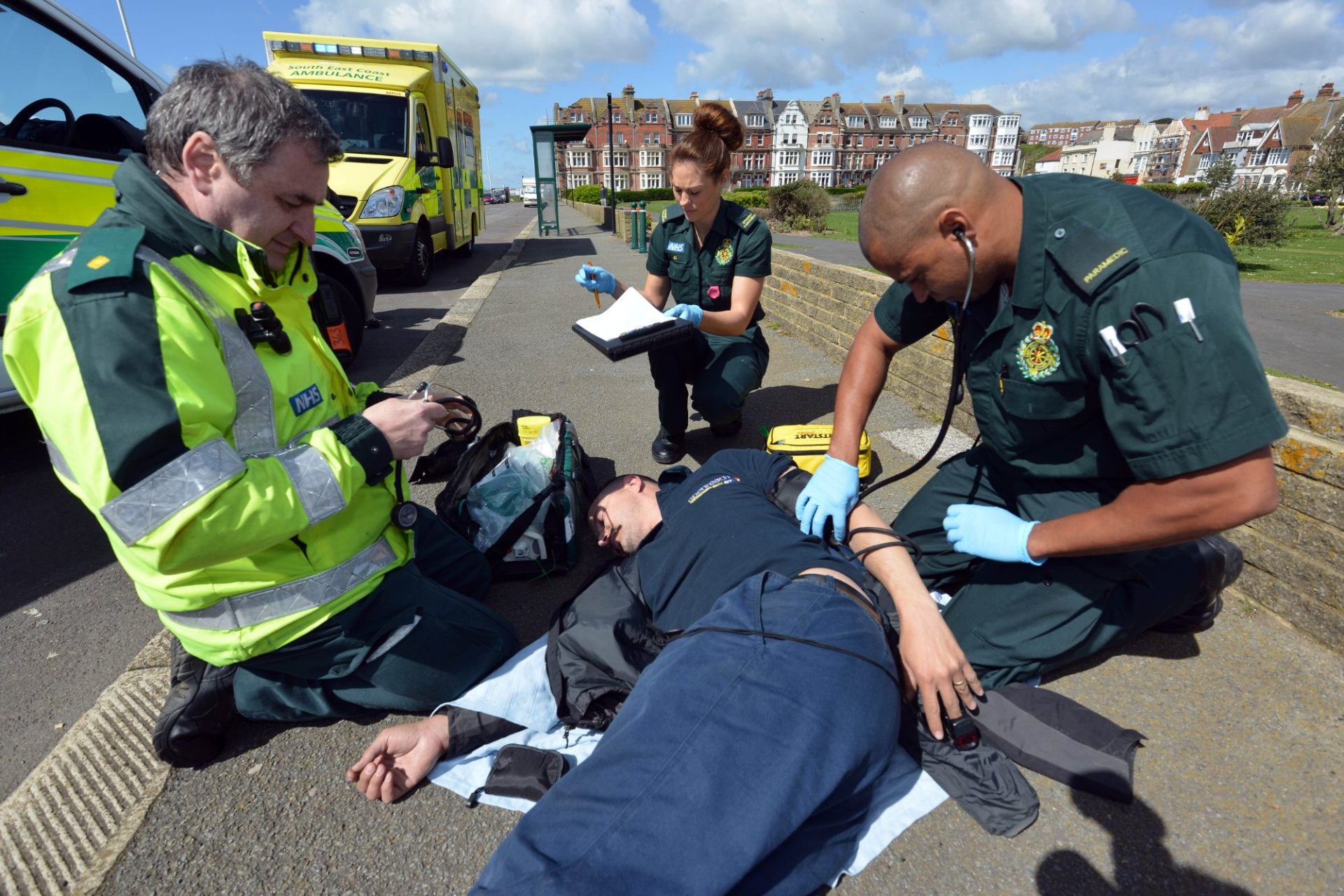
Acting fast is allowed. Going quiet afterwards is what gets challenged.
Few consultations are as emotive as those about the services people call in an emergency, and few are as misread. Response times, station locations and cover models are felt as questions of life and safety. And urgency, which these services can never rule out, can justify acting before you consult, but it rarely removes what needs to come next.
Each blue-light service also consults under its own statutory framework: fire and rescue authorities on their Community Risk Management Plans, police and crime commissioners on the police and crime plan and the precept, and ambulance trusts, as NHS bodies, under the duty to involve and the substantial-variation regime. Layer on the Public Sector Equality Duty, unions and staff representation, and often a fire and rescue governance role for the PCC, and the stakeholder map is unusually complex.
Do it well and you carry communities and staff with you. Do it poorly and you face challenge, referral and a loss of public trust that is hard to win back.
Each blue-light service consults under its own rules.
Fire & rescue
Fire and rescue authorities must consult on their CRMP (formerly the IRMP), the plan that sets out how risk is assessed and resources deployed, including station and appliance changes.
Station closures and mergers, crewing and appliance models, prevention strategy, and the CRMP itself.
Police
Police and crime commissioners consult on the police and crime plan and on the precept, and forces consult communities on policing models and estate. In many areas the PCC also governs fire.
Precept setting, the police and crime plan, neighbourhood policing models, and front-counter or estate changes.
Ambulance
Ambulance trusts consult as NHS bodies: the duty to involve applies, and significant changes can amount to a substantial variation, engaging scrutiny and the referral power.
Response and hub locations, hear-and-treat and see-and-treat models, and estate reconfiguration.
The changes that most often need support.
High-visibility decisions, close scrutiny, and strong community feeling.
Station & hub location
Closing, merging or relocating stations and hubs, the most visible and most contested changes of all.
Response & crewing
Changes to response standards, crewing and shift models that the public reads directly as safety.
Risk & service plans
CRMPs, police and crime plans and service strategies that carry statutory consultation duties.
Precept & budget
Precept consultations and budget-driven service changes under close public and political scrutiny.
Prevention & engagement
Community risk, prevention and engagement programmes reaching seldom-heard groups.
Collaboration & mergers
Blue-light collaboration, shared services and governance changes across service boundaries.
Independent, and proven where it counts.
Fire and rescue authorities use tCI QA to demonstrate independence in contentious CRMP and service-change consultations.
Two ways in: train your team, or assure the consultation.
Courses for service teams
Independent assurance
The emergency services consultation checklist
A practical, plain-English checklist drawn from our assurance work, so you can pressure-test your next consultation against the standards that matter.
The judgments blue-light services are read against.
Emergency service decisions are felt as safety, and the case law reflects it. Three judgments that show where these consultations fail:
The transfer of a Police and Crime Commissioner’s functions to a mayor was undone for want of an adequate consultation: the reasoning was never put before consultees, so responses could not engage with what was actually proposed. Much cited on the intelligent response requirement.
One police station closure was quashed because a consultee’s specific suggestion, to defer until savings from new technology could be assessed, was never considered. A poor consultation is not enough on its own: it takes an unconsidered response.
A modern discussion of substantive legitimate expectation and of section 31(2A). The Treasury was entitled to resile from the expectation relied on, which is worth reading before promising a process you may need to change.
Emergency services consultation, answered.
Do fire, police and ambulance services consult under the same rules?
No, and that is the crux of it. Fire and rescue authorities consult on their Community Risk Management Plan, police and crime commissioners on the police and crime plan and precept, and ambulance trusts as NHS bodies under the duty to involve and the substantial-variation regime. The common-law Gunning Principles and the Public Sector Equality Duty apply across all three, but the statutory route differs by service.
Why are emergency-service consultations so sensitive?
Because the public understands them as questions of safety. A proposal to close a station, change response standards or move an ambulance hub is felt personally and locally, and attracts strong campaigning and close media attention. That raises both the reputational stakes and the likelihood of challenge if the process looks anything less than fair.
A PCC now governs our fire service too, does that change consultation?
Where a police and crime commissioner also holds fire governance, you are consulting across two statutory frameworks with overlapping but distinct duties and stakeholders. This makes clear planning of who is consulted, on what, and under which duty especially important, and is an area where an independent check adds real value.
Can you tailor support to a specific service?
Yes. We work across fire and rescue, policing and ambulance, and shape both training and assurance around the specific framework you consult under and the change you are making. Whether that is a CRMP, a precept consultation or an ambulance reconfiguration, we align to your statutory route.
Consult on safety with confidence.
Tell us which service, and the change you are planning. We will scope the right mix of training and independent assurance for your framework.